Showing posts with label ✗✗✗✗❣. Show all posts

July 22, 2013

Oxford grays.


“I saw the spires of Oxford
As I was passing by,
The gray spires of Oxford
Against a pearl-gray sky.”

~Winifred Mary Letts


On a rare summer afternoon, when the sun falls lovingly on storied spires, Oxford takes on a regal hue-a gold as rich as memory.  But it is not in such a light that the university is remembered by the legions of poets who have trod its manicured quads.  They almost all chose another hue, a gray that pays homage to silvered spires, medieval stones, a favorite author’s hair?, and the venerability of a seven-hundred-plus-year-old bastion of learning.

DI Robert Lewis: Life born of fire. I bet that means something in Latin.  
DS James Hathaway: What makes you say that? 
DI Robert Lewis: This is Oxford. Everything always means something in Latin.

Oxford is not a college town — it is the college town. Its namesake university’s 38 colleges are so steeped in scholarly history they make Harvard and Yale seem like baby-faced freshmen. To wit: Oxford’s New College was last considered “new” in the 14th century. Even the obsolete term “New World” is newer.
To underline this point, the city contains the famous Bodleian library, the research library of Oxford University, whose present buildings can be traced back to 1602.

DI Robert Lewis: Have you learned nothing from this case? Books are bad for your health.
DS James Hathaway: Not if you just read them.

The famous Library was well endowed with grotesques and gargoyles, but they were crumbling badly. In 2009, nine new gargoyles were unveiled.  A contest was held for school children to design new gargoyles around the theme of myths, monsters or people that had a historical connection with Oxfordshire during the last millennium.


Once the designs were chosen it took over two years to complete the carvings by local sculptors, and the children had a hand in crafting the final product. Be sure to watch for them when you visit and keep you looking up at the symbols, emblems, motifs, animals, and demons clinging to the roofs and walls of Oxford buildings. The stonemasons, both medieval and modern, used their imaginations and humor in creating hundreds of amazing stone carvings. Bring your binoculars.

The number of famous people that have studied and done research at Oxford University, is as you might imagine an extremely long list that includes J R Tolkein (author of The Lord of the Rings) and of more recent relevance, Tim Berners-Lee who is credited for inventing the Internet…imagine that on your CV!

DS James Hathaway: You know what one of the Inklings is meant to have said when Tolkien started reading them 'Lord of the Rings'?
DI Robert Lewis: Oh, spare me, Sergeant; I've had enough of imaginary worlds.
DS James Hathaway: You'll like it, sir; I promise.
DI Robert Lewis: Go on then.
DS James Hathaway: They said: "Not more flipping elves!" Except they didn't say 'flipping'.
DI Robert Lewis: [laughs] I like it...

Personally, I love to ‘tour’ the city and its hidden gardens, picturesque gates, and its old and new architecture.


DS James Hathaway: Well, Caesar was killed by a group of conspirators; gota check Brutus, Cassius, Casca...
DI Robert Lewis: This is Oxford, not ancient Rome.
DS James Hathaway: They're easily confused, sir.

A long time Oxford resident, Colin Dexter has the curious distinction of having made his home city one of the fictional murder capitals of the UK. He has slaughtered more than 80 people in his Inspector Morse stories, turning the dreaming spires of Oxford into a kind of academic killing fields. Tourist buses regularly bring Morse fans on a guided tour of the locations of his stabbings, stranglings and poisonings.

DI Robert Lewis: [Over the phone] I'm not stirring on Sunday for anything less than murder.


On to new Endeavour(s) 


June 10, 2013

Our self-destructing little planet.


Maybe I have lived too long, but I observe a world in which...   

...extreme is now a fashion much like haute couture. We have extreme sports, extreme mental disorders (simple bipolar has a new higher level called radical bipolar), extreme measures (our judicial system and plastic surgery), extreme manicures (the Louboutin manicure is red coated on the under side of the nail with black on top). Not to mention the OPI nail polish company issuing a hilarious Slavic  theme of over the top color with titles like You're Such a Buda Pest purple and Eat my Keilbasa pink; extreme foods and of course extreme heels(now topping off at 9 inch platforms).

And here I thought my little old Extra Strength Tylenol was enough of a high-powered addiction.

But it's the bad behavior that has come along with this high octane epidemic that is disturbing. Benign upset has turned into high speed rage ... and not just regular road rage.

Recently I was followed by an angry exploding 400 pound gorilla in a car. When I got out of my car he started screaming (luckily in plain sight of an entirely peopled parking lot) profanity I never even heard of before (Extreme Cursing?).  It seems I cut him off 2 miles back. I was completely unaware and tried to apologize. But he didn't want to hear me as it was all about his in-my-face rant.

Years ago this used to be handled with a dirty look and a scoff. Now there are criminal high speed chases and verbal threatening throw-downs to get your point across. I was warned by my friendly neighborhood policeman not to upset anyone while driving because today drivers are packing heat. It would be nothing for anyone to roll down their window and ‘Glock’ you in the face for merely honking your horn.

Public lynchings and professional wrestling events were always crowd thrillers. But the popular temperature is rising. Now bigger is better is the lifestyle trend. But what life?  What style?   What are we enhancing?

We've come a long way babies. Now we have the weekly mall, theaters and school shootouts and mad bombers. Jailed Boston bomber Dzhokhar Tsarnaev has now become the latest sex symbol for many young girls. It's been reported that he is getting tons of sympathetic mail from these fanzines. Who are the parents of these girls? And who is doing his PR? They say he is beating OJ and the Menendez Brothers in Big House Hotness.

We have digital paper tigers with foul mouths; the more outrageous the more adored! Not admired for their accuracy or journalistic skills but rather for their flame-out postings. 

In our extreme world we refuse to honor moderation (forget aging). We can’t even die naturally. The medical industry has to cut you up and radiate you to the end.  Dying with dignity has become an extreme race with high desperate attempts at longevity and no real basic human awareness.

And let’s talk about the height of extreme fads: the Detox diets ... living on green drinks for 30 days and high colonics and breaking this fast with gluten free doughnuts. What is gluten free and how did that become such a universal medical issue.  Aren't we really just talking about food allergies? What is new there ... why start a whole grocery section devoted to this?  I can't open a bag of peanuts in a plane because someone might die of airborne nut fumes. Even yoga has gone off the charts with this new kind of high intensity hot yoga. Imagine doing classes in a room heated to 102 degrees with the intent to cleanse you of your toxins. You don't leave class cleansed you leave dehydrated and looking ravaged. So much for om-ing yourself into vitality. How high/low can we go?

And the worst?  Rudeness has become the latest in extreme competitive sports. Cursing at strangers, butting ahead in any line, stealing cabs from one another, making scenes over nothing in hotel lobbies and restaurants, indulged children having horrible public tantrums has all become acceptable. Nobody cares or even hears since we are all too busy talking so loudly and obnoxiously into our cell phones to no one that matters.

Everyone is screaming for attention. We have all slittered into our own private hell of extreme narcissism.  Trust me when I tell you that there is no customer service big enough to handle that cultural problem.

Nobody wants to settle for moderation as an alternative (cutting back? who? me?) It’s a hard sell and not sexy.  I wonder if we are beyond understanding balance. What does the new normal really mean in an amped up world of triple shot Lattes and quadruple layered eyelashes.

But one thing is for sure ... E x t r e m e  is no longer a remote happening ... it has arrived, on everyone's doorstep!


Where is the USS Enterprise?


February 18, 2013

“I am not young but I feel young. ...


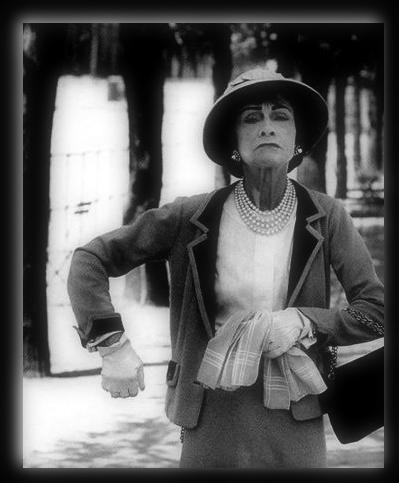
Excuse me for interrupting you Coco, but you know how sometimes if you don’t say something while you’re thinking of it, you have lost it forever? 

I’m thinking that I have been with such wonderful young people always-whatever their age.  

I used to love to talk to an old friend who lived to be over ninety.  He would sit down, take my hand and say, “You and I are good friends and I’m not trying to think of your name because I won’t remember.”  

Dear Bill.  

I have a rough time remembering when my birthday is.  Age is totally boring and so many can’t get on with it. They’re haunted by aging, by getting old.  I think it’s because of this terrible retirement thing.  If you’re through with work, what do you do with yourself?


There was an excellent write-up in Interview in which Jeanne Moreau said:

“I shall die very young.”

“How young?” they asked her.

“I don’t know, maybe seventy, maybe eighty, maybe ninety.  But I shall be very young.”


. . . The day I feel old, I will go to bed and stay there. J'aime la vie! I feel that to live is a wonderful thing.” 
~Coco Chanel


I second that.


November 27, 2012

He went to a marvelous party


Be daring,
be different,
be impractical,
be anything that will assert
integrity of purpose
and imaginative vision
against the play-it-safers,
the creatures of the commonplace,
the slaves of the ordinary.

~Cecil Beaton


“I’m an enormously talented man,” Noel Coward once said superciliously, “and there’s no use pretending that I’m not.”

One of the most renowned bon vivants of the dinner party circuit was the urbane and sophisticated Noel Coward, the son of a failed piano salesman who wrote about the rich with such wit and insight that they simply assumed he was one of them. So impeccable were his skills at self-creation with his “thin veneer of sophistication,” his persona was not only the inspiration for Cary Grant, but scores of others hoping to copy his inimitable style.

Coward claimed that he habit of wearing flamboyant silk dressing gowns was purely functional, “wonderful things to play in because they’re so comfortable to act in.” Nevertheless, they caused quite a stir, and he welcomed, if not courted, the publicity. They were not so much regarded as feminine as they were subversively antimasculine. Still, he persisted in flouncing about in them during interviews until they became his trademark, a symbol of the new Jazz Age–loose, smart and glittery. He was as well known for the way he dressed as for his literary successes and stage performances. “I took to wearing colored turtle-necked jerseys,” he said, “more for comfort than effect, and soon I was informed by my evening paper that I had started a fashion.”


Cecil Beaton noted that “all sorts of men suddenly wanted to look like Noel Coward–sleek and satiny, clipped and well groomed, with a cigarette, a telephone, and a cocktail in hand.”

“Wit ought to be a glorious treat like caviar; never spread it about like marmalade.”
~Noel Coward


True, and we could use some of that wit right now.


November 20, 2012

Thanksgiving


A sanctuary where the lost are welcomed, the forlorn found. It is a simple, stark and quiet place where solace resides in one’s own thoughts, where comfort fills the still spaces and where the moment before and the one immediately following matter not. It is a place to hide and heal where no notice is paid or polite inquiry sought. Polite, I say, because the calm of it is unmistakable, inviting no harm, rancor, or ill will.

There is something quietly heroic in the straightness of its lines, the sturdiness of its weathered planks and the heavenward tilt of its prow.  It's vantage takes in what must seem like the whole of the world in one sweeping gaze. Spare and modestly ordered, if one were to look through the panes of its windows, might glimpse long even rows of hand tooled wood pews cradling the forms of folk in solemn contemplation.  Or in another fanciful stab of reverie, eye a salt-worn attendant versed in the ways of the sea, hunched over a desk strewn with logs, maps and coastal charts, intent in his duties to stave off calamity.

What I do know is this. It is a photograph taken of a church on the Isle of Iona, Scotland, where Saint Columba founded his great monastery. The archaic rock strata of Iona is some of the oldest on the planet, possibly 1500 million years old, and as such it certainly carries a primeval and powerful creative energy.  What lures men and women from the far corners of the earth to the tiny rocky island off the west coast of Scotland?   Not the scenery, for there is more magnificence on the mainland of Scotland. It must be something deeper. Something knocking on the heart which speaks of mystery and holiness, of dreams and truths which have outlived time. There is an indescribable atmosphere on the tiny island washed by the waters of prayer down through the ages. Hallowed and blessed by Christians for about 1,400 years, as well as by those who were there long before.  Is it any wonder that an aura of spiritual peace surrounds the island.

“This island set apart, this motherland of many dreams,
still yields its secret, but it is only as men seek that they truly find.
To reach the heart of Iona is to find something eternal....”  G.E. Troup

It’s a fitting narrative for this stunningly stark place connoting a remembrance of things past and a foretelling of times to come with wishes placed, fears soothed, promises pledged, and on occasion, prayers answered.

It is all of what we will be feeling this day of thanks when we sit, kneel, genuflect or be together. Whether the thresholds you cross this day be grand or sparse, walk them with grace and gratitude, content in your lot, your place, your fellow man and your time spent here on this earth.


November 11, 2012

U n s h a k e n.


Skyfall Spoiler Alert!

Ah yes, the dreaded feast days.  A time of crisp weather, long walks, bountiful meals, unspoken antipathy among family members and – to my delight, martinis and Bond, James Bond that is.

Synonymous with sophistication, allure, and delicious decadence, the martini holds a hallowed place in social history – it is the “King of Cocktails”. Like the stiletto heel, it never goes out of style. Entire bar menus are devoted to its variants and a hip, retro cultural movement has adopted the martini as its cornerstone for stylish fun.The martini remains on the cutting edge of liquid fashion, constantly reinventing itself. There is no other world-traveler like the martini. Never watered down, the martini stands strong and silent in every language with no translation needed.

For the true aficionado, be sure to archive a Bond Lover’s Memorable Martini. You’ll be channeling 007 in no time.

No one in history has done more for the martini and its distinctive reputation than the fictional character who put the man back into manhood, Ian Fleming’s James Bond. If you really want to win friends and influence just about everyone in your very selective and choicest of circles, we’ve compiled some fascinating data about Mr. Bond and his martini habits, settling the record straight once and for all regarding “Shaken not Stirred” and Gin or Vodka. Time you stepped up to be the life of the party!

The shaken Martini is first presented to Bond in the first Bond film Dr. No in 1962, but Bond did not order one himself until Goldfinger (1964). Since then, each Bond has himself ordered the drink, except for two.

Roger Moore’s Bond never! although he did receive one in the 1977 film The Spy Who Loved Me.

Bond first ordered a drink to be shaken in Fleming’s novel Casino Royale (1953) when he requested a drink of his own invention which would later be referred to as a “Vesper“, named after the Bond girl, Vesper Lynd. After just meeting his CIA contact Felix Leiter for the first time, Bond orders the drink from a barman while at the casino.
‘A dry martini,’ he said. ‘One. In a deep champagne goblet.’
‘Oui, monsieur.’
‘Just a moment. Three measures of Gordon’s, one of vodka, half a measure of Kina Lillet. Shake it very well until it’s ice-cold, then, add a large thin slice of lemon peel. Got it?’
‘Certainly monsieur.’ The barman seemed pleased with the idea.
‘Gosh, that’s certainly a drink,’ said Leiter.
Bond laughed. ‘When I’m…er…concentrating,’ he explained, ‘I never have more than one drink before dinner. But I do like that one to be large and very strong and very cold, and very well-made. I hate small portions of anything, particularly when they taste bad. This drink’s my own invention. I’m going to patent it when I think of a good name.’ — Casino Royale, Chapter 7: Rouge et Noir [5]


Following the novel’s lead, the Vesper was prominently featured in the 2006 film version of Casino Royale.
A Vesper differs from Bond’s usual cocktail of choice, the martini, in that it uses gin and vodka, Kina Lillet instead of vermouth, and a lemon peel instead of an olive. In the same scene Bond gives more details about the Vesper telling the same barman that vodka made from grain instead of potatoes makes the drink even better. Russian and Polish vodkas were also always preferred by Bond if they were in stock. Although there is a lot of discussion on the Vesper, it is only ordered once throughout Fleming’s novels and by later books Bond is ordering regular vodka martinis, though he also drinks regular gin martinis. In total Bond orders 19 vodka martinis and 16 gin martinis throughout Fleming’s novels and short stories.

Why shaken, not stirred?

Scientists, specifically biochemists, and martini connoisseurs have investigated the difference between a martini shaken and a martini stirred. According to a study at the Department of Biochemistry at the University of Western Ontario in Canada to determine if the preparation of a martini has an influence on their antioxidant capacity, the shaken gin martinis were able to break down hydrogen peroxide and leave only 0.072% of the peroxide behind, versus the stirred gin martini which left behind 0.157% of the peroxide. The study was done at the time because moderate consumption of alcohol appears to reduce the risk of cataracts, cardiovascular disease, and stroke, none of which afflict the fictional James Bond.

Andrew Lycett, an Ian Fleming biographer, believed that Fleming liked his martinis shaken, not stirred because Fleming thought that stirring a drink diminished its flavour. Lycett also noted that Fleming preferred gin and vermouth for his martini. It has also been said that Fleming was a fan of martinis shaken by Hans Schröder, a German bartender.

Some connoisseurs believe that shaking gin is a faux pas, supposedly because the shaking “bruises” the gin (a term referring to a slight bitter taste that can allegedly occur when gin or vodka is shaken). Others contend that Bond was only shaking because of the vodka it contained. Prior to the 1960s, vodka was, for the most part, refined from potatoes (usually cheaper brands). This element made the vodka oily. To disperse the oil, Bond ordered his martinis shaken; thus, in the same scene where he orders the martini, he tells the barman about how vodka made from grain rather than potatoes makes his drink even better. This does not explain why Bond in the films still preferred his drink to be shaken rather than stirred, because beginning mostly in the 1960s vodka refined from potatoes was virtually replaced by vodka refined by grains.

Other reasons for shaking tend to include making the drink colder or as Bond called it, ice-cold. Shaking allows the drink to couple with the ice longer thus making it far colder than if it were to be stirred. Shaking is also said to dissolve the vermouth better making it less oily tasting.

While properly called a Bradford, shaken martinis also appear cloudier than when stirred. This is caused by the small fragments of ice present in a shaken martini.

Now aren’t you glad you asked?  Good, let’s spare the sky and have a martini.


For Charles, always unshaken!

October 25, 2012

There is travel . . .


. . . and then there is travel-


And the two should never be confused. They’re not interchangeable.  The first is merely a go-through-the-motions exercise, the dried-out process of getting somewhere, spending a little time, and returning home.  But travel is another matter entirely. It is a consuming experience, an adventure, really, and some little piece of it stays with you forever. What separates the extraordinary journey from the merely ordinary often has little to do with place.  It is simply a matter of what you bring to the trip-your frame in which you place the experience.

Despite popular opinion, travel is not, and never has been, only about collecting pre-packaged pieces of scenery.  It’s much more personal than that.  It is an individual response-your response-in a given context that makes a trip either memorable or disposable.  When it’s memorable, it’s because of what you saw and what you felt and what you thought.  Then, too, there is the discovery of unexpected pleasures.  And the irony of liking what you thought you would not,  and disliking what you expected to embrace. 


The joy of travel is making a wrong turn and confronting a sight that is at that moment the prettiest you have ever seen;

it’s a restaurant whose smell can always be recalled and always makes you feel warm inside;


it’s that little inn and the incredible days you spent there.


When I think about my favorite trips, I remember the details: colors, tastes, smells, sounds.  But what I remember most of all is who I met.  Let’s be honest, a great view is simply a great view.  It rarely makes a trip.  We have all been to places not likely to be photographed or written about where we have had an absolutely wonderful time.  And that, after all, is the point.


October 16, 2012

Bottoms up!


Quoted from the science of aging:“…being thin is what ages you most.”


Un-Censored and I get quite grumpy about the whole 'anti-aging' mantra. We become extremely testy when told that women must 'fight' ageing, as if it is some rampaging mob armed with pitchforks. We think that women with wrinkles instead of stretched, worked-on, wind-tunnel faces, are beautiful.  On the other hand, we see no reason to develop any more lines than necessary. So we are going to keep on eating.
Studies confirm what many women have known for a long time and what the magnificent Catherine Deneuve enforced years ago; that after a certain age women have to choose between their face and their derrière. (The genteel Daily Telegraph translated this as choosing between face and body, presumably because too many of their gentle readers might drop their Frank Cooper's Oxford at the mere mention of a lady's bottom.)
So hurrah for science!  Hurrah for a generous appetite. Hurrah for all of our munificent derrières.


September 18, 2012

Okay, let’s be really honest about this.


No matter how hard we try, no matter how noble our intention, and no matter how loath we would be to admit it, most of us still hold fast to various tired, timeworn stereotypes about people from other countries.  No matter how sophisticated we think we are, we all seem to have some dark corner tucked away somewhere that’s just right for keeping these embarrassing beliefs alive.
It’s not our fault really – it’s a failing that can be chalked up to that catch-all usually referred to as human nature.  All right, maybe we should accept a little of the blame, so long as it’s only a little.  After all, what are we supposed to do about the fact that there are Swiss who seem a little more fastidious and compulsive than the rest of us?  Or that there are French people in Paris who can be a trifle less than friendly to visitors from other countries?
Anyway, it seems as if every time I think I’ve finally snuffed out that last smoldering urge to blithely generalize about another culture or its people, something happens to relight the small flame of bias that burns in my subconscious. 
What brought this post on?  A conversation with Charles who told me that there had been a study conducted many years ago at the Royal Hospital in Edinburgh and after extensive research they found that the British are–how can I put this delicately?-shall we say more inclined than other people to act in a peculiar manner.  The study actually revealed that Britain seem to have a higher percentage of loopy souls than other places.  We’re not talking here about people that are seriously ill, but rather the kind of genuinely off-the-wall behaviour that’s usually categorized as eccentric.
For anyone who thought that the oddities of British behavior consisted mostly of peculiarities like warm beer, chilling baths, eating kippers first thing in the morning, and having some kind of unnatural affection for darts, the study proofed to be a real eye opener. 
For instance; a man who bathes in nothing but baked beans, a potato inspector who eats nothing but potatoes and spends his holidays studying the ur-potato and its offspring in Peru, and an aristocratic woman who came to be interviewed with her plastic lobster (which she continually stroked) and mentioned that she had a plastic crab at home to keep it company. Anyone still wondering where the cast of Monty Python got its material?
In any event, the idea that looniness is somehow endemic (epidemic?) to British society was simply too fraught with amusing possibilities to let a little thing like fear of contributing to or perpetrating stereotypes get in the way. So I nosed around a little to see just how heartwarmingly loony the British actually are. Quite daft, I can happily report.
And lest you think that all of this was done strictly for your amusement, there is a sobering side to eccentricity.  It can only flourish in a tolerant society and that it often produces radical new ideas by virtue of its willingness to cast off accepted norms.

To wit-
A few years ago, a construction worker from a place called Plumstead was arrested at a bank in the City of London. He'd arrived there in a Rolls-Royce, dressed up in Arab robes and a burnoose, and had tried to persuade the bank's staff to part with some $1.7 million. The bank was ready to go for it, but then someone noticed that "the Arab prince" had forgotten to change his work boots. He got eighteen months at Knightsbridge Crown Court.

This episode, I thought, could have been lifted straight from Monty Python (with John Cleese playing the hopelessly forgetful brick carrier). But then the whole Monty Python series could be interpreted as a string of documentaries on the follies and foibles of British life. For British life can, from time to time, be even battier than anything dreamed up as these ads in The Times of London attest:
"Tutor with Scottish accent urgently required for intelligent parrot."
Or: "Bombing strongly stimulated the adrenal glands: genuine inquirer ... seeks a substitute."  
Or these, the lonely exploits of British pioneers recorded in early editions of the Guinness Book of Records (before it went international): "Carrying an open bag of coal for thirty-six miles" or "Smoking fourteen full-sized cigars simultaneously, while whistling, talking, or giving a bird imitation."


Now I'm not sure whether the people who did or required these things should be called nuts, screwy, loopy, or just plain demented. (Can you imagine working your way up from one cigar to fourteen, or spending your life in search of a satisfactory substitute for bombing?) But I suspect that most people in Britain would simply call them eccentric. For eccentricity is one of those things that the British hold in high regard.   
I remember for example a friend who when he was a student at Oxford told me that people still talked fondly of the Reader in Spanish who carried a lump of sugar around his neck "to sweeten my conversation," and an ear trumpet "for catching clever remarks." They remembered with affection the professor who prowled the streets reciting poetry to himself and jumping into the air when he reached his favorite passages. And they positively doted on the memory of William Archibald Spooner, who was the warden of one of the colleges shortly after the turn of the century. Spooner had a reputation for mangling the English language in an unconsciously hilarious fashion. (He is in fact the father of the spoonerism, the accidental transposition of the initial sounds of two or more words, e.g., blushing crowl crushing blow.) But he also seems to have been quite genuinely cuckoo. He once went up to a student and said to him in all seriousness, "Now let me see. Was it you or your brother who was killed in the war?" He also invited a new don to dinner, saying, "Do come to dinner tonight. We have that Fellow, Casson, coming." "But, Warden," said the don, "I am Casson." "Oh, well," said Spooner. "Never mind. Come anyway."
Having learned early in my life to appreciate the dotty and the wacky I was delighted to discover, that Charles had devoted some considerable time to the subject.  And he's found some, well ... how shall I put it in scientific terms? Some absolute lulus.
The thing that first caught my interest was just how off-the-wall some of the people, Britons especially, seemed to be.  There was the Barking Vicar of Berkshire, as he was called, who enlivened sermons with an array of sound effects; the Ministry of Defense chemist who was so obsessed with Robin Hood that he carries a bow and arrows and dressed up in Lincoln green in the evenings; and the cave-dweller in Wester Ross whose third wife left him because their bijou home was flooded whenever the tide carne in. And there's the inventor (mostly of strange, impractical machines) who, to raise money for kidney patients, rappelled down tower blocks dressed as a pink elephant. "I've probably cured more alcoholics," he said modestly, "than most doctors."
Well, this brief account of selected British oddness was enough to whet my appetite for more. So being an investigative sort, I immediately ask Charles to send more information on the subject.
A few days later it arrived and delivered up a number of new prospective candidates for a British Eccentrics' Hall of Fame. There's the pacifist and long-distance tricyclist who lived in a bombed-out shell on the outskirts of Belfast. And there's his opposite number in the peace-war continuum, a zealous militarist who lived hemmed in by models of tanks and who, during an interview (conducted in bed), pulled out a hand grenade and said, "Frightened, dearie?"  
But there is also something more interesting: an attempt to measure and account for what the eccentric personality might be; how it might be related to various forms of madness; and whether it could be connected to the peculiar quality of British life.
In the English dictionary an eccentric is defined as "an irregular, odd, or whimsical person." But it's not a word or a concept that translates easily into other cultures or languages. The Japanese equivalent is a character that is "out of the ordinary, disobedient, and evil," and I suppose the nearest equivalent in a totalitarian state is that ominous word for "one who thinks differently," dissident.  So clearly the first thing you have to have for the emergence of a true blue, dyed-in-the-wool eccentric (in the British sense) is a fairly tolerant society. That, I think, they probably have: a society that is by and large loath to send for the men in the white coats just because Aunt Emily has bought her six hundredth garden gnome.
There is something of this spirit of tolerance in a letter by the poet Dame Edith Sitwell (no mean eccentric herself) from her castello in Florence. "An old gentleman, aged 92," she wrote to a friend in 1951,"... came to a lunch party here two days ago and broke down and sobbed at lunch because his pet hen was dead. This bird used to sleep in his bed, and was in the habit of kissing him good night. There were also rows at hotels because he would bring her into the dining room." (All this may be batty, she seems to be saying, but it's not certifiable. It's interesting!)
But, according to my reading, there's a second thing you have to have: a society that is receptive to novel ideas.  For the contention is that eccentrics (apart, apparently, from tending to think in images and to be vivid dreamers) have a unique ability "to cast off preconceptions and to produce radical new ideas which can be put to good use."   
Now this is not something that I would myself claim for Britain, even in my rosiest of humors. (It seems to me in many ways an awesomely hidebound place.) You can imagine my surprise, then, when I read that over half the world's new commercially adopted ideas and inventions have come from Britain.
I immediately spoke to Charles. "Yes," he said, "quite true. There was a worldwide study conducted. " But does this necessarily have anything to do with your eccentrics? "I don't know," he said. "But I suspect there are parallels."
I remembered a line from John Stuart Mill: "Eccentricity has always abounded when and where strength of character has abounded. . .  That so few dare to be eccentric marks the chief danger of the time."
This new vision of Britain as a place packed to the gunwales with slightly cracked inventors (all taken semi-seriously) filled me with some joy.  And I began to plague my friends with questions about any eccentrics they might have known. My friend remembered his Oxford tutor who, if he saw him on the street, would regularly come to a halt and start a conversation with him while he was still fifty yards away. And he recalled that the dippy William Archibald Spooner had lived to the ripe old age of 85.
I rooted about in Charles’ papers to see if there were any other advantages to being a fully paid-up eccentric like Spooner. There were, indeed. Eccentrics, I read with rising enthusiasm, are self-confident. (Well, they'd have to be, wouldn't they, to bathe in baked beans and go long-distance tricycling?) And because of this, they tend both to ignore other people and to be free of stress. The result?
They're almost unbelievably healthy. "The average eccentric," I read, "visits his doctor sixteen times less frequently than his 'normal' compatriot."
And so, I have joined in his network of those who are searching them out. I've even decided that there's much to be said-given the clear health advantages-for becoming an eccentric myself. Oh, I don't mean that I intend to go all the way just yet. (Just think what it must cost to take a bath in baked beans or to have that long-distance love affair with the proto-potato.) But I've recently been watching reruns of Monty Python for a few documentary tips, and I've begun noticing, well, how dementedly individual some of my neighbors actually are. Soon I am hoping to launch into an unsuspecting world (sotto voce): "I am trying to become a cultivated enigma." When I've done that, I'll try out my favorite: "Blessed are the cracked, for they shall let in the light."
In the meantime, I am doing what I can to carry to a yet wider audience (I hope there are thousands of you out there) the message with which the Royal Hospital in Edinburgh started:  "Are you eccentric? If you think you are, or know someone who may be, contact the Royal Edinburgh Hospital."  Soon, I shall introduce the hospital to the would-be bank robber from Plumstead who, for the want of the right shoes, just missed out on $1.7 million. I think, with the hospitals help, he's got a great future.